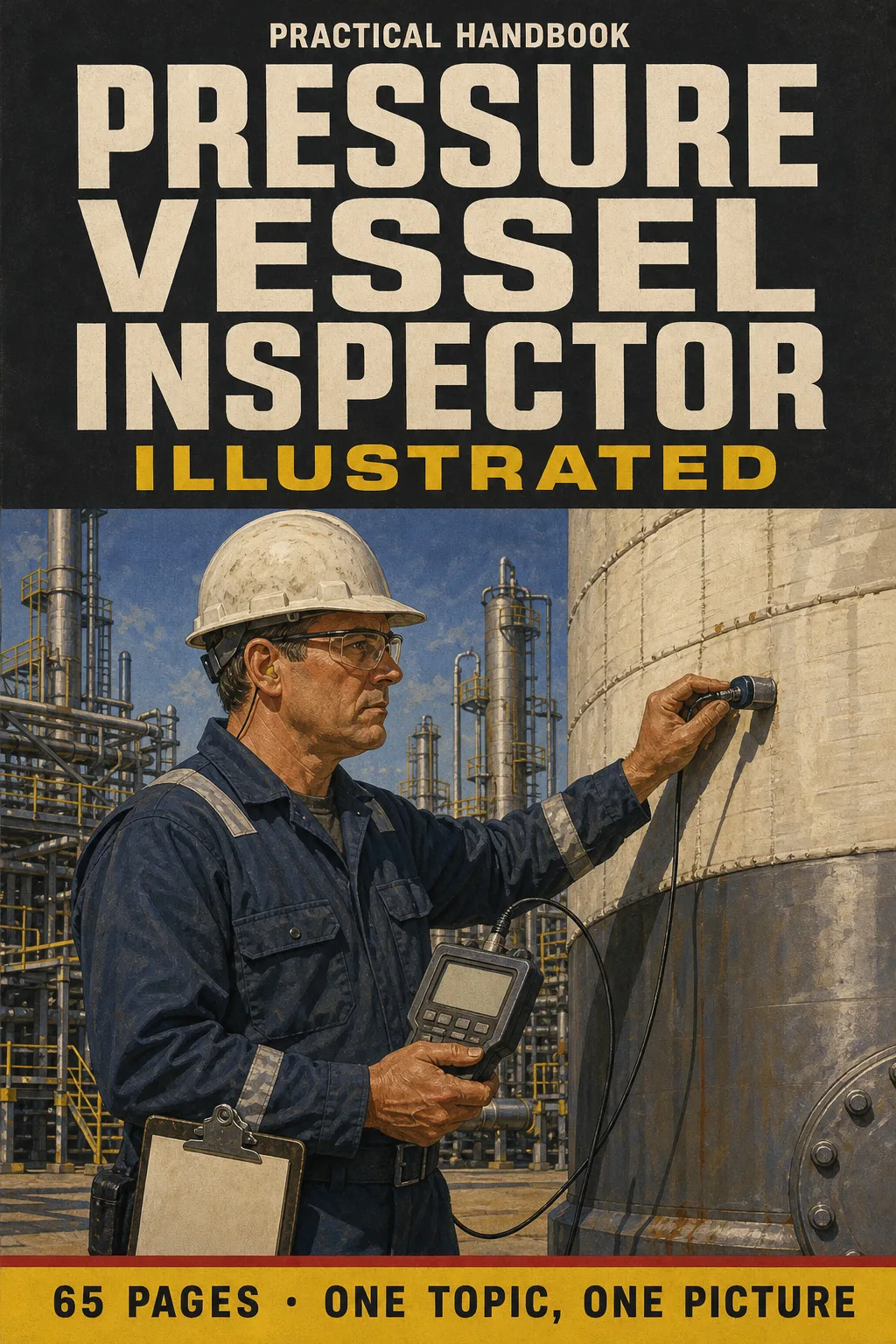
📄 Digital book in PDF · read it on your phone or print it
Corrosion rate, remaining life, the half-life rule, t-min and MAWP, worked in the same five steps every time. Plus damage mechanisms, NDE, relief devices and pressure tests: one topic per page, the drawing first, then the code paragraph it comes from. 65 illustrated pages.
🔒 Secure checkout · PDF by email · 30-day guarantee
Every page has one big drawing and a box with the formulas, numbers and code paragraphs you need to know:


Swipe to see more →
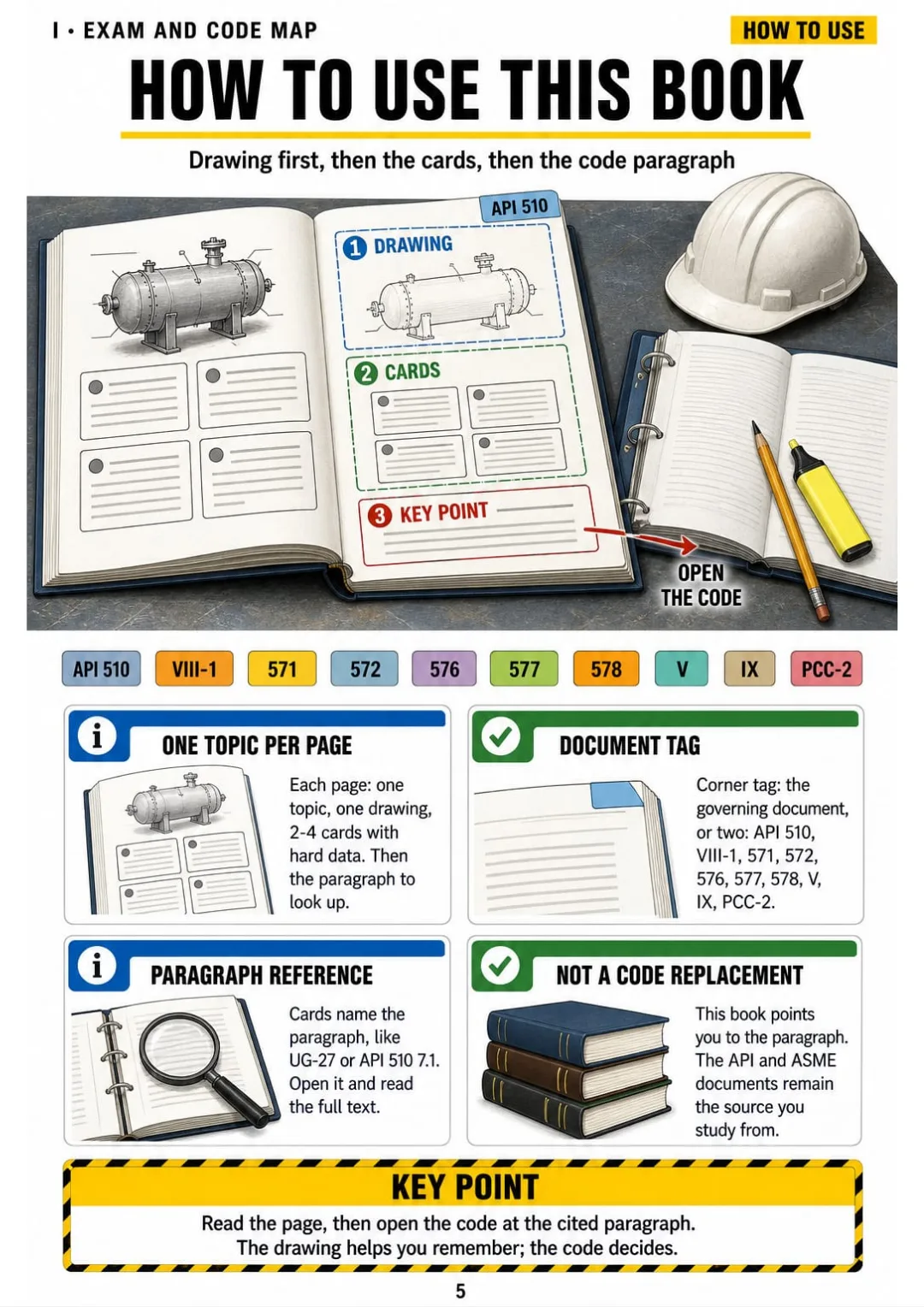
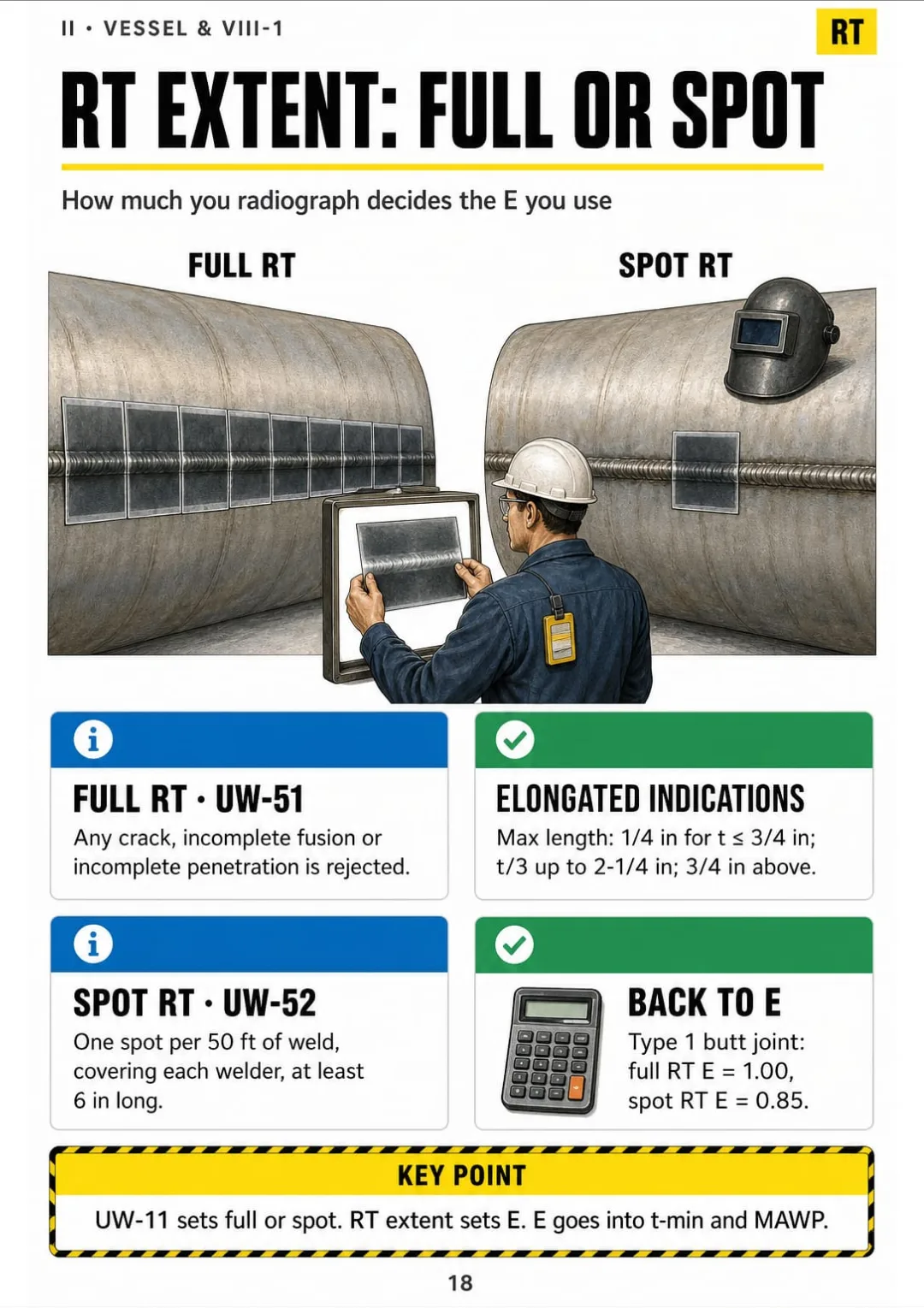
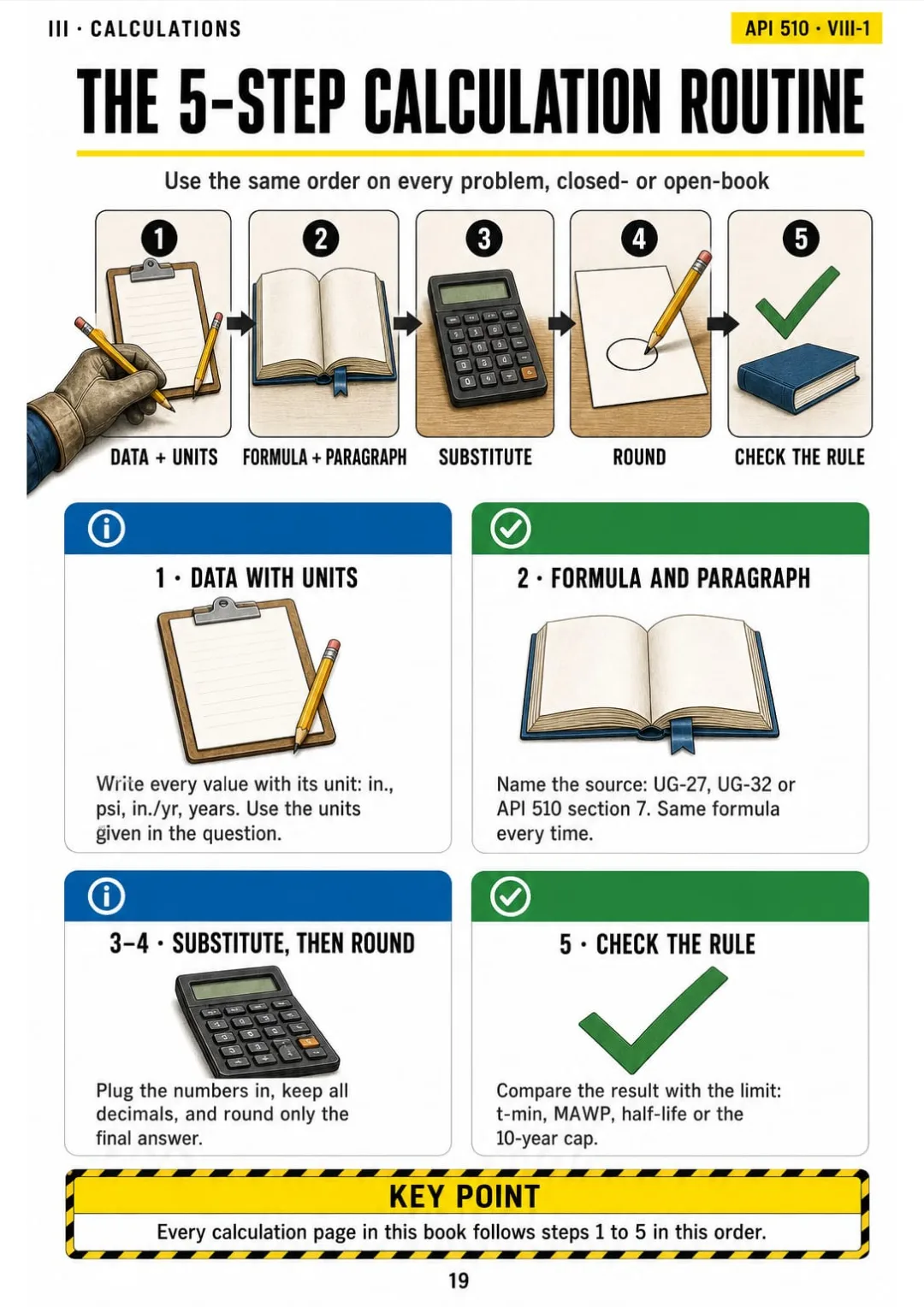
These are real pages from the book. The table of contents is the full one: 8 parts and 61 topics.
You're at the kitchen table after a twelve-hour shift, with a practice problem in front of you: two thickness readings, four years apart. You work it once and get one answer. You work it again and get another.
It isn't your math. The code and most prep material walk through corrosion rate, remaining life and t-min in long paragraphs, each with its own order. Nobody hands you one routine that works for all of them.

In this book, that routine is one page: data, formula, substitute, round, check. Five boxes in a row, drawn, with the code paragraph each number comes from.
Shell t-min, head MAWP, static head and the next inspection date each have their own page too, all worked in those same five steps.
The next time that problem shows up, you know where to start and where to stop, without flipping back through the code to find the order.

The exam and code map, ASME VIII-1 basics, calculations, damage mechanisms, inspection and NDE, relief devices and repairs, welding and the final review: 65 pages, all illustrated
Think of it this way:
Practice exam at the kitchen table, the week before your window. A question gives you a corroded shell and asks for its MAWP. The clock is running, and the code runs to hundreds of pages.
You open the shell MAWP page and see the cutaway: measured thickness, corrosion allowance subtracted, the formula with E and S, and the UG-27 paragraph tagged in the corner. On exam day, you already know where to look in the code.

CUI, wet H2S cracking, relief device set pressure, the hydrostatic test and WPS vs PQR work the same way: each one on its own page.
Pressure Vessel Inspector Illustrated is 8 parts and 61 topics, all drawn, and it ends with the numbers to have at your fingertips and an exam-week checklist.
What you see drawn, you don't have to memorize.
How to use the book with your codes open, the Effectivity Sheet, which document answers which question, who does what, and units and rounding
Vessel anatomy, head types, the nameplate, joint categories A to D, joint efficiency from UW-12, allowable stress, MDMT and radiography extent
Every calculation in the same 5 steps: CMLs, long- and short-term corrosion rate, remaining life, shell and head t-min, MAWP, static head and the next inspection date. One routine, so the same problem gives you the same answer.
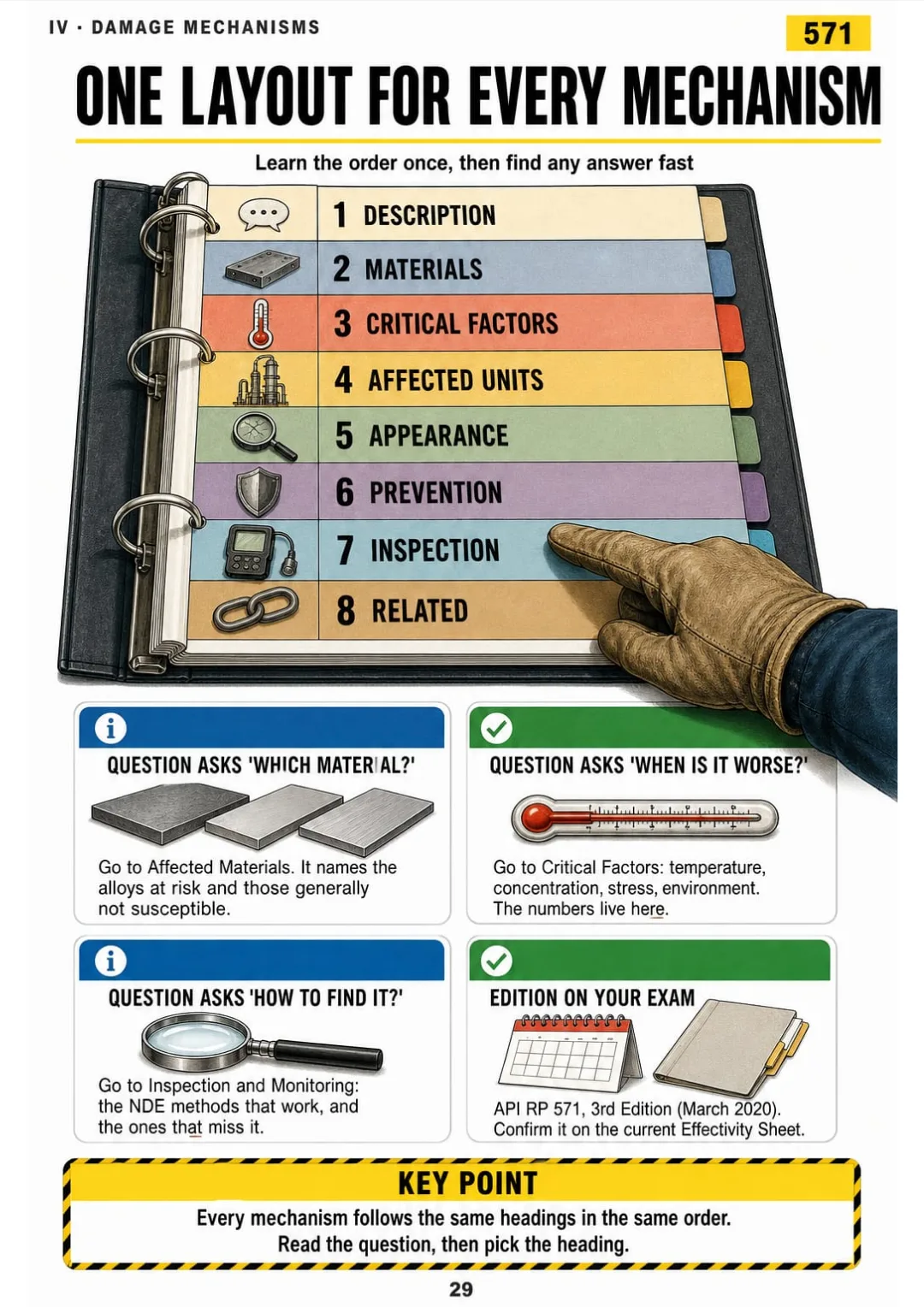
Every API 571 mechanism under the same headings, so you can compare them at a glance: CUI, chloride SCC, wet H2S damage, caustic and amine cracking, HTHA, brittle fracture, fatigue, creep, erosion and MIC
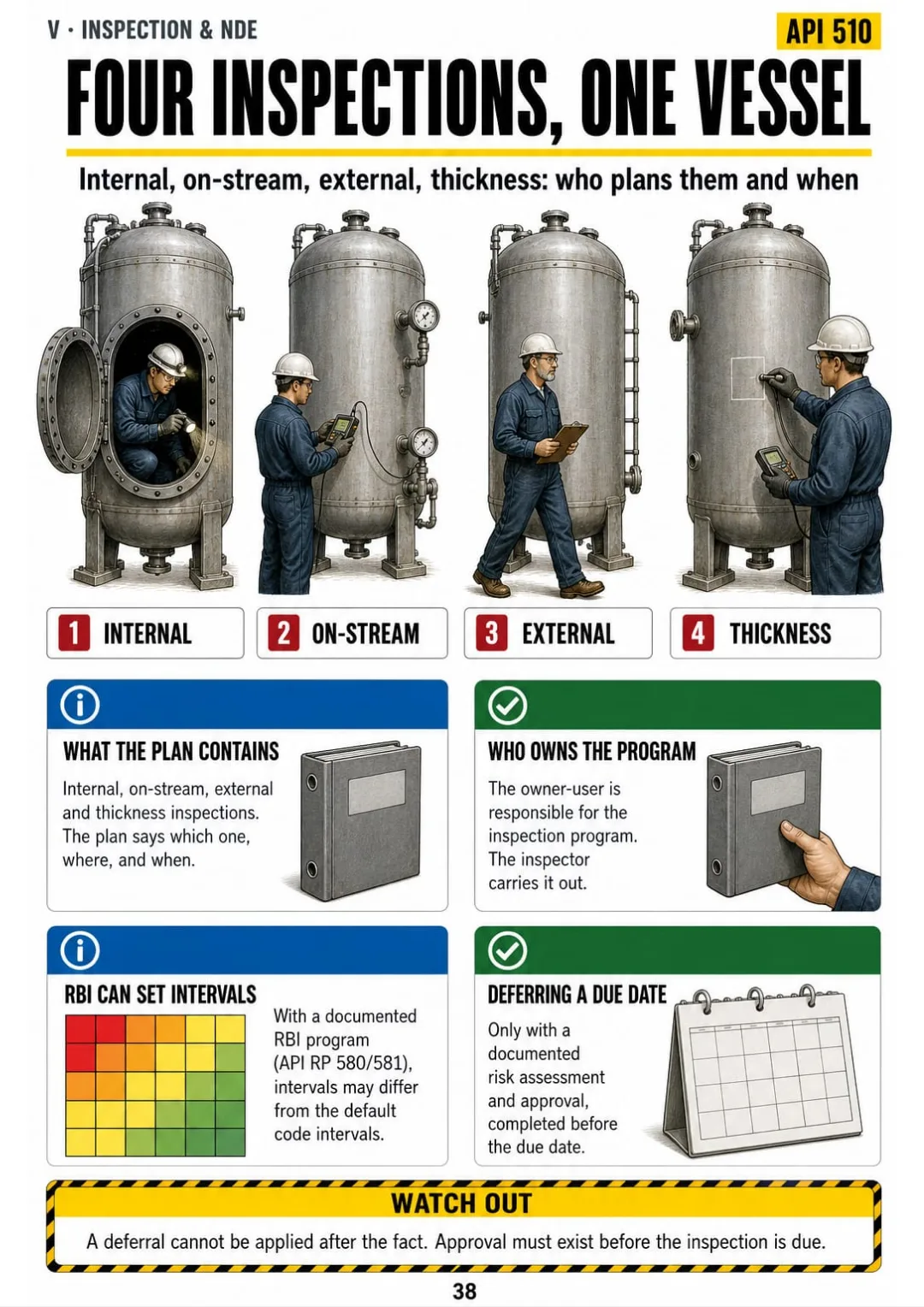
Inspection plans, half-life and 10-year intervals, on-stream inspection, external checks, and VT, PT, MT, RT and UT under Section V
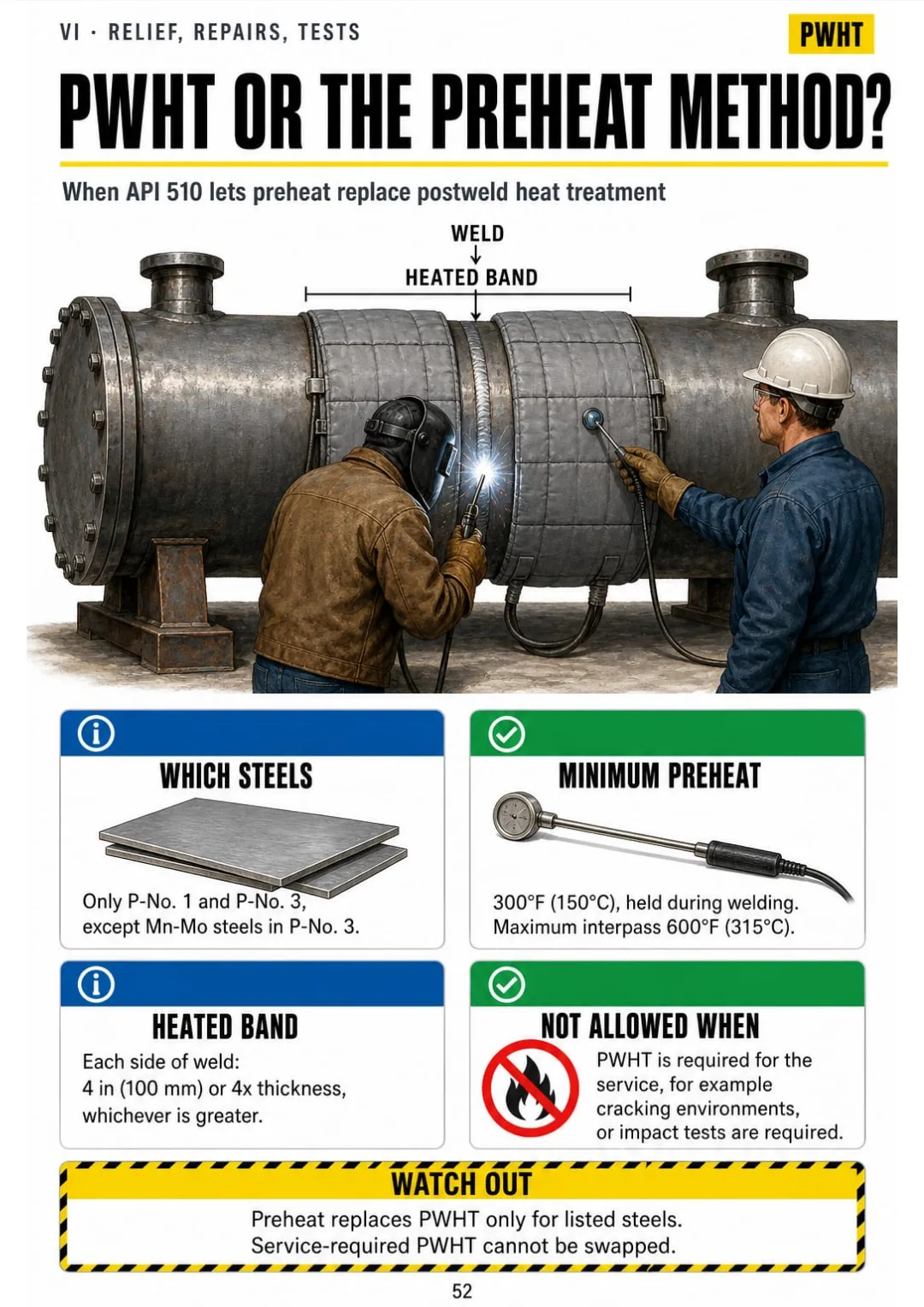
Relief device types, set pressure and overpressure, PRD intervals, repairs vs alterations vs rerating, repair methods, PWHT, and hydrostatic and pneumatic tests
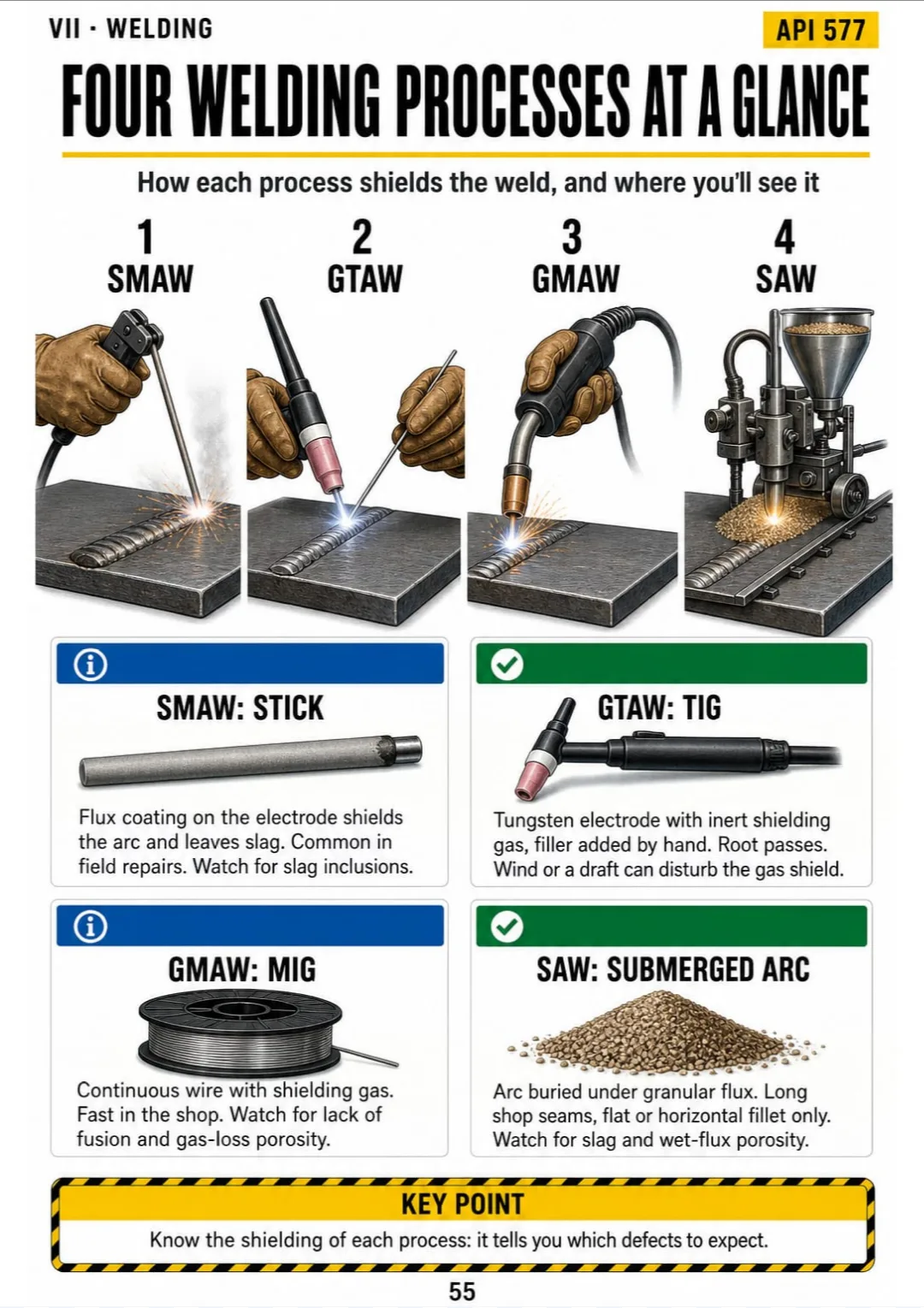
Welding processes, weld discontinuities, WPS vs PQR vs WPQ, essential variables, reviewing a PQR line by line and welder continuity
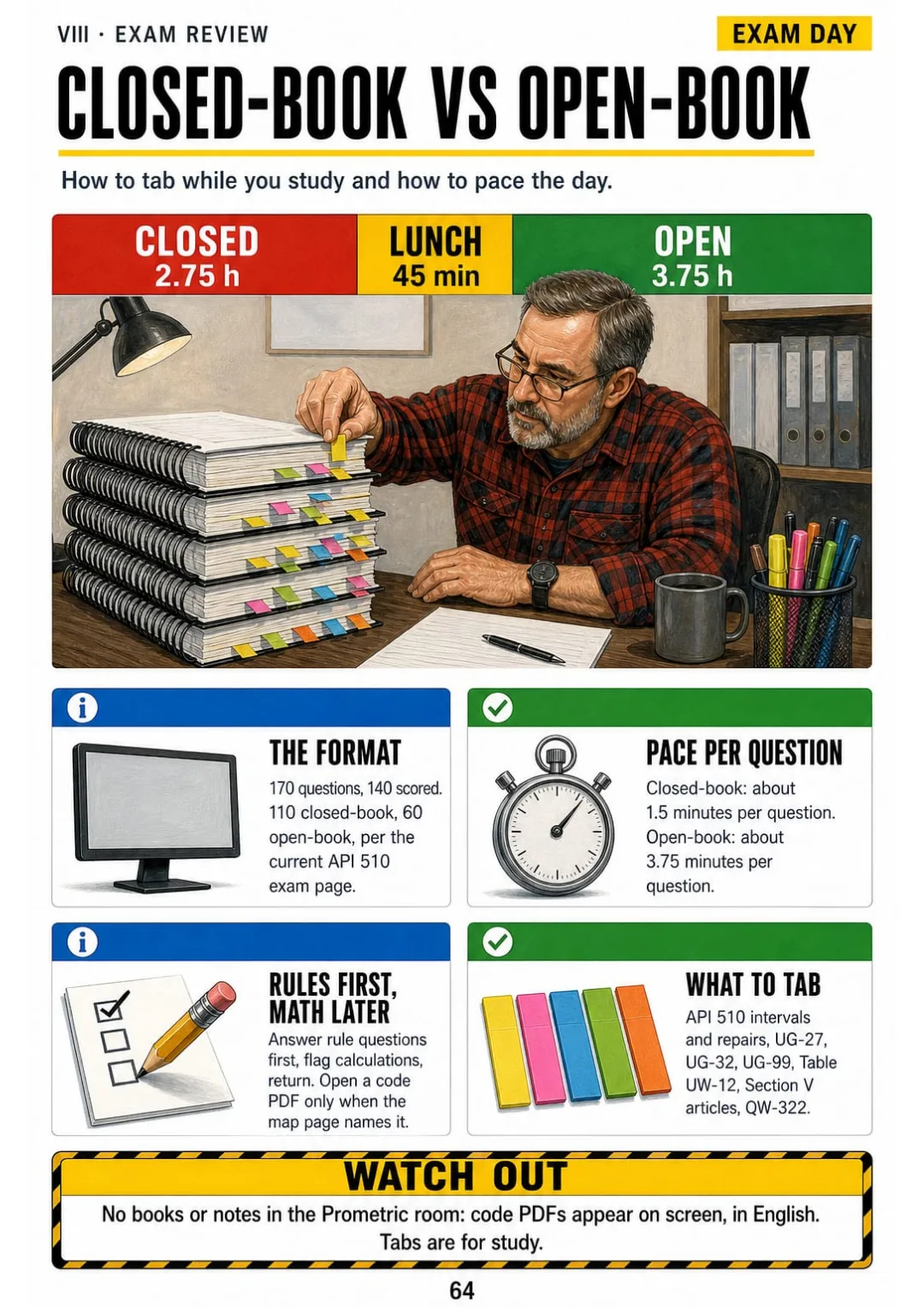
The numbers to know, closed-book vs open-book pacing and an exam-week checklist, so your last review fits in a few pages
At the end of the book: The numbers to have at your fingertips, closed-book vs open-book pacing and an exam-week checklist.
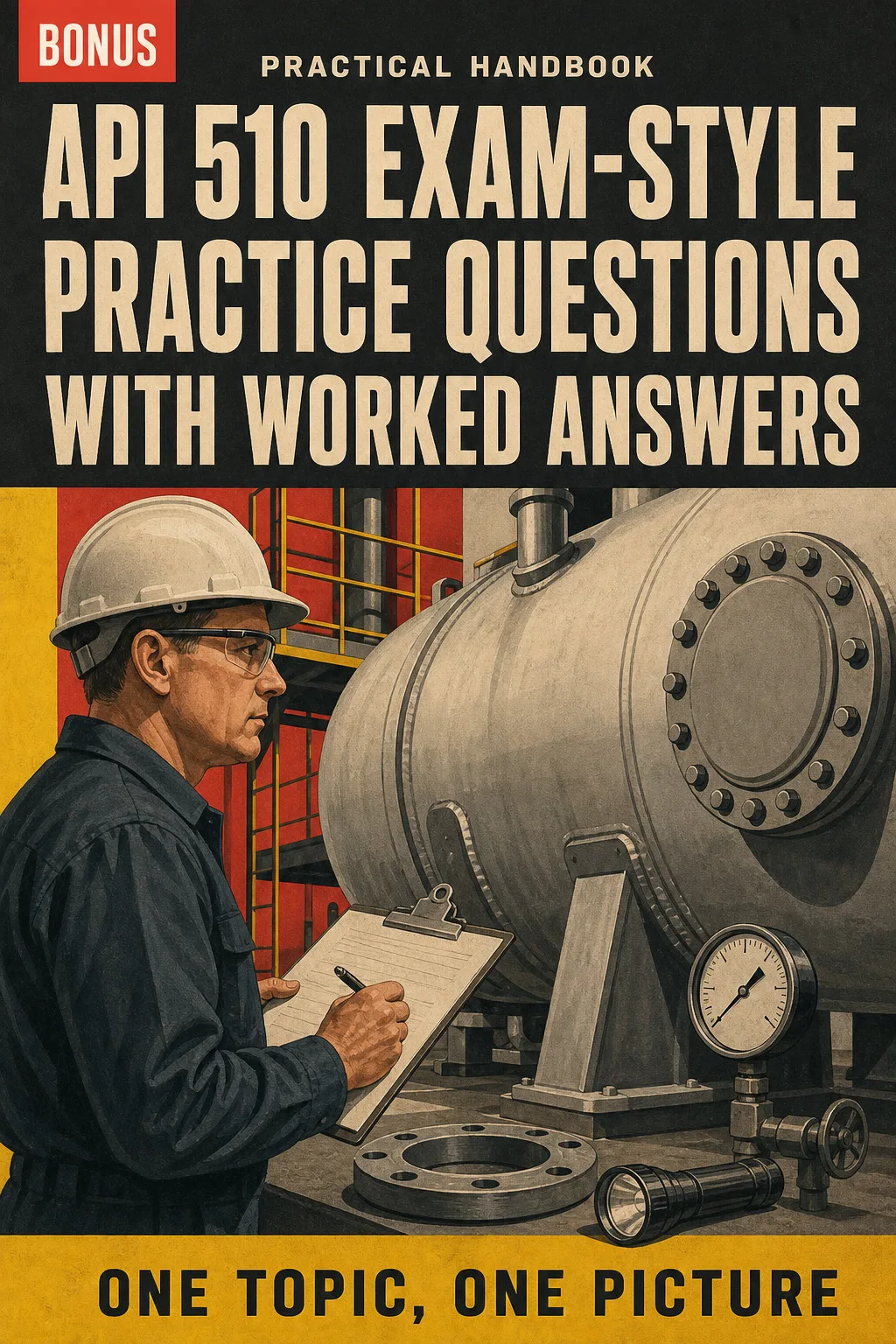
Test yourself on calculations, intervals and code questions, and see each answer worked out with the paragraph it comes from.

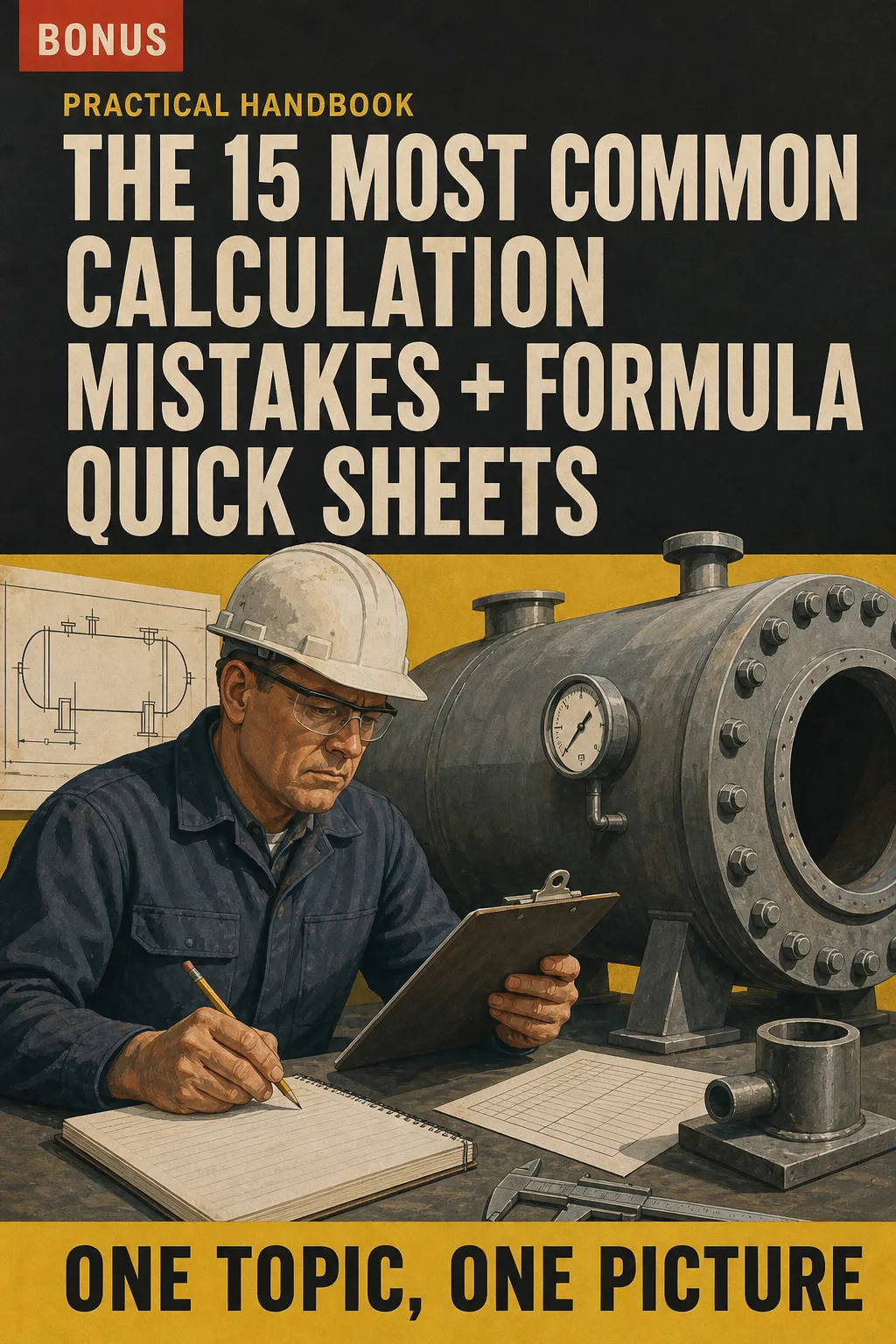
Review t-min, MAWP, corrosion rate, remaining life and test pressures on one-page sheets, and spot the errors people make most often before they cost you points.
📄 This is a digital PDF book sent to your email: nothing is printed or shipped.
PDF by email: We email you Pressure Vessel Inspector Illustrated as a PDF, together with the two free books. It's a single payment: no installments, no extra charges.
Every document gets a map and every topic gets a page, so you know which code answers which question before you open it.
Calculations in the same five steps, the numbers to know and the pacing for closed-book and open-book, ready for one last review.
Damage mechanisms, intervals and relief devices drawn on one page each, to print and keep with your inspection notes.
📄 This is a digital PDF book sent to your email: nothing is printed or shipped.
Try Pressure Vessel Inspector Illustrated for 30 days, bonus books included.
We refund everything if the file won't open, if the book isn't what you see here, if you were charged twice or if the email doesn't arrive. Just email us.
You pay once. No subscriptions.
Yes. It doesn't explain what a valve is. It organizes the body of knowledge: which code answers what, the calculations in five fixed steps, and every topic drawn.
From the API ICP Body of Knowledge and the current Effectivity Sheet, and the editions of the documents it lists: API 510, API RP 571, 572, 576 and 577, and ASME Section V, VIII-1 and IX. Every page names the document and paragraph its numbers come from, so you can check each one against the codes you'll use on exam day.
No. It's independent study material, not affiliated with or endorsed by API or ASME. It doesn't give you a certificate or count toward your API eligibility: the certification only comes from passing the API exam.
No. It's a study companion for the weeks before the exam. You still need the API and ASME documents, and you can't take this book into the exam: the open-book part uses only the documents API provides.
No. They're written for this book, in the style of the exam, with worked answers and the paragraph each one comes from.
As a PDF by email, at the address you enter at checkout, together with the 2 bonus books.
No. It's a one-time payment.
It's a PDF, so you can print it at home or at a print shop and take it to work.
You have 30 days. We refund everything if the file won't open, if the book isn't what you see on this page, if you were charged twice or if the email doesn't arrive: just email us.
No more rereading code paragraphs that don't stick.
Corrosion rate and remaining life, drawn and worked in five steps.
You walk into the API 510 exam knowing where everything is.
Drawings make studying faster.
The book is right below.
One-time payment: US$ 27 · Guarantee: 30 days · PDF by email
YES, I WANT PRESSURE VESSEL INSPECTOR ILLUSTRATED FOR US$ 27📄 This is a digital PDF book sent to your email: nothing is printed or shipped.